
Self-harm scars and concealment can present in many forms and potential combinations of trauma. There can be scars from burns, cutting, scratching, and patchiness from hair-pulling, among others. Each person and their circumstances will be addressed, and a variety of treatments may be used due to varying skin textures, colours, and often the extensive nature of damage or trauma. Medical tattooing offers a powerful tool to soften the skin’s appearance, integrate the treated area with the surrounding skin, and help clients regain a sense of normalcy.
Understanding the Challenge:
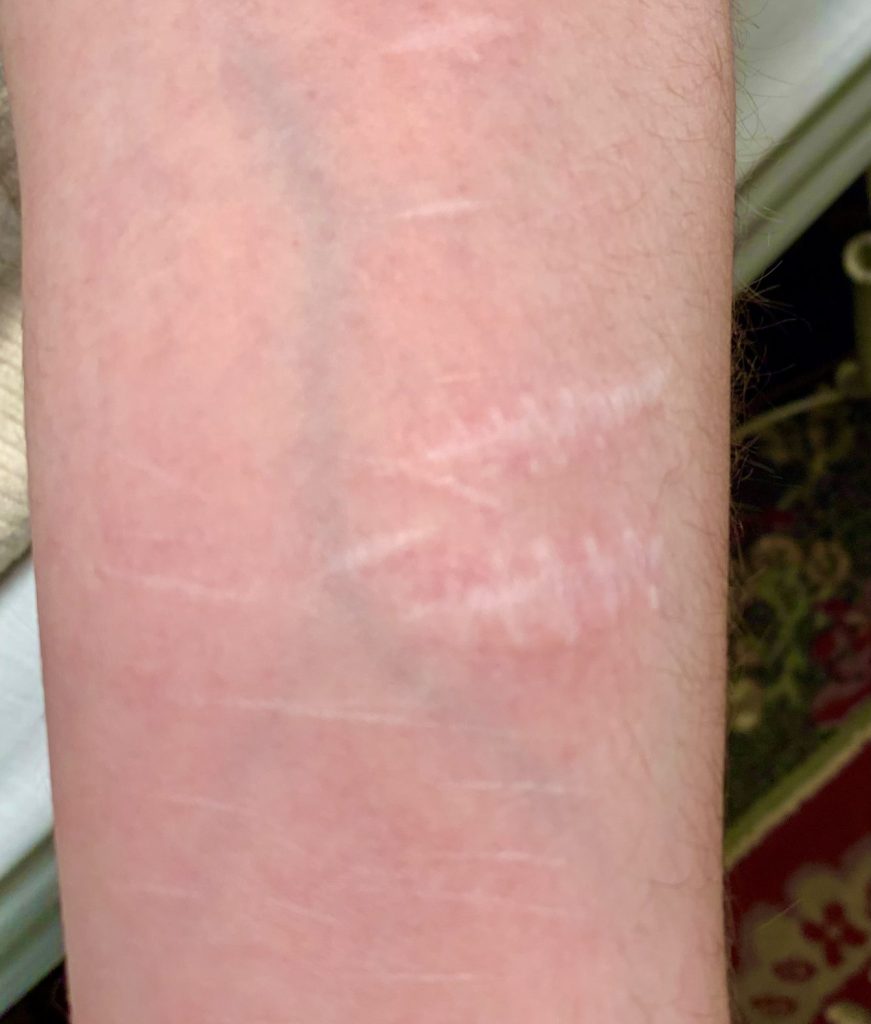
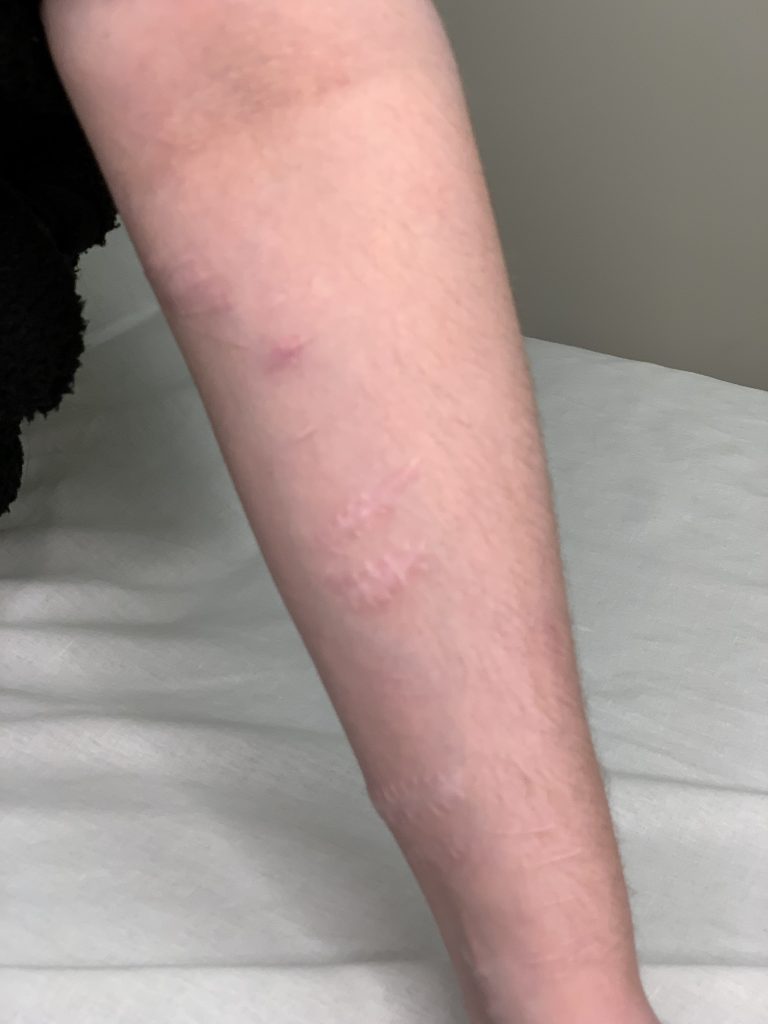
Self-harm scars often present with significant textural changes (e.g., raised, pitted, shiny) and discoloured areas (e.g., hyperpigmentation, hypopigmentation).
The Solution: A comprehensive and patient approach is essential for self-harm scar revision.
- Texture Blending: ISR (inkless scar revision) microneedling, using medical-grade serums, helps create smoother skin and a revised textural feel, reducing the visual impact of raised or indented areas.
- Colour Correction and Blending (when needed): I meticulously match and blend pigments to the surrounding healthy skin, camouflaging areas of discolouration and creating a more uniform appearance. This may involve multiple sessions and a variety of shades.
- Softening Edges: Harsh or defined edges of burn marks and scars can be softened through feathering techniques, making them less noticeable.
- Scar Maturity Assessment: Scars of all types must be fully matured (typically 12-18 months post-injury or surgery) before tattooing, as this ensures stable results.
- SMP: Scalp micro pigmentation may be used to fill in any patchy areas on the scalp where hair may not have fully grown back to give the appearance of a cohesive hairline and scalp.
Before:
After:
Aftercare:
The success and longevity of your medical and cosmetic tattooing treatments heavily rely on diligent aftercare.
